The thesis
AI maturity is not license count, prompt usage, or model access. It is the ability to delegate bounded work safely while preserving context, validation, reviewability, and rollback.
AI Platform
This package is my current operating model for AI Platform Engineering: how to move from personal AI assistance to human-supervised agents, repository readiness, team-level review loops, system-aware governance, and constrained autonomy without confusing output volume with engineering maturity.
AI maturity is not license count, prompt usage, or model access. It is the ability to delegate bounded work safely while preserving context, validation, reviewability, and rollback.
Repository instructions, issue contracts, CI guardrails, evaluation records, ledgers, ownership metadata, and operational evidence are platform primitives, not side documents.
Increase delegation only when the next class of work is backed by real evidence: small diffs, deterministic checks, clear ownership, and a credible rollback path.
Reading path
Part 1
A maturity model for agentic engineering should measure how safely work can be delegated, not how many people have adopted a model or assistant.
Part 2
AI adoption phases and AI maturity levels are related, but not the same: phases describe transformation work, while levels describe demonstrated capability.
Part 3
GitHub can make agent work inspectable, but records become evidence and authority only through an explicitly governed delivery loop.
Part 4
Repository readiness is a local operating contract for a bounded change class, not an instruction file, a scalar score, or permission to operate autonomously.
Part 5
The team is the smallest durable operating boundary for agent-assisted delivery, connecting repository evidence to shared lifecycle conventions and delegated authority.
Part 6
Repository-level context is not enough for distributed systems. Agents need system graphs, ownership metadata, infrastructure boundaries, and governed cross-repo reasoning.
Part 7
In agentic engineering, CI is the enforcement kernel: agents propose, but tests, policy, review, and humans decide what receives authority.
Part 8
AI engineering adoption should start with bounded pilots, SMART goals, RAID logs, misalignment signals, and explicit rollback paths.
Practical artifacts
A change-class-specific checklist for deciding whether a repository can admit a bounded, supervised agentic change.
A pragmatic playbook for choosing AI engineering pilots that can prove value without damaging reliability, trust, or delivery discipline.
A template-driven way to make GitHub issues and pull requests operable for human-supervised AI agents.
A stakeholder matrix for detecting when AI engineering adoption is drifting away from safe delegation and toward organizational theatre.
Visual notes
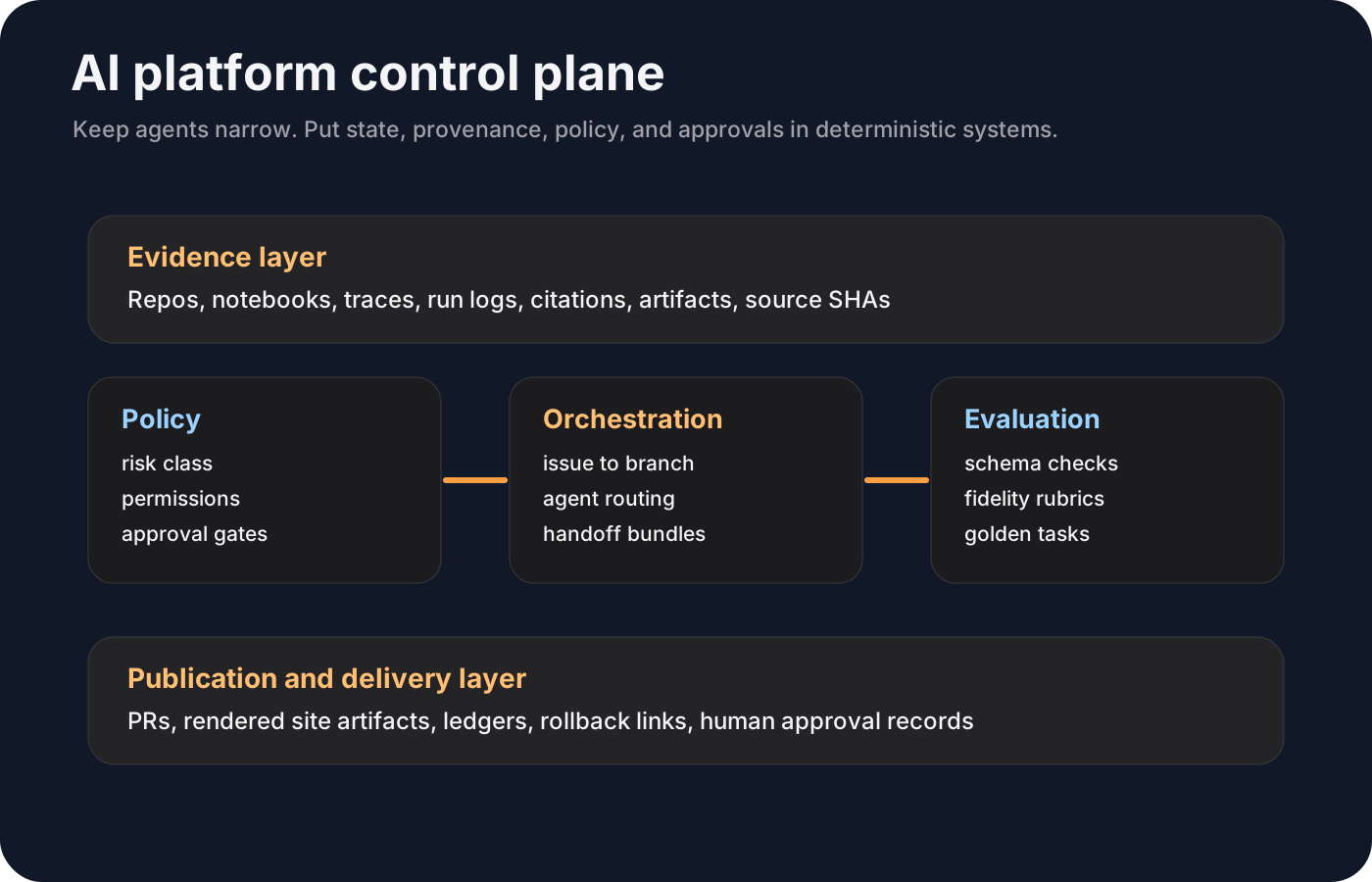
A reference map for the control-plane layer needed to run human-supervised agents across repositories.
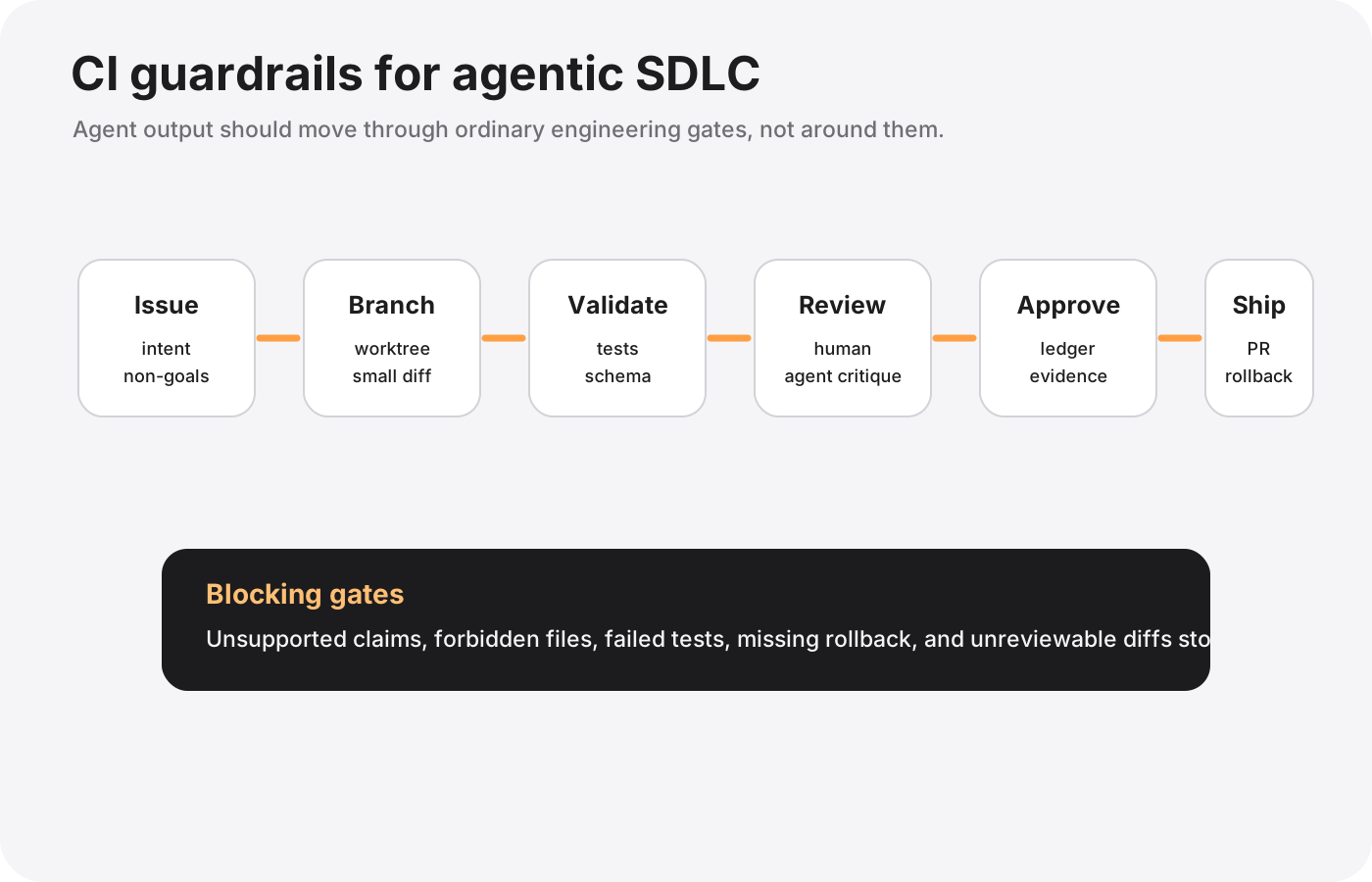
A guardrail pipeline that turns agent output into reviewable, validated, and reversible pull requests.
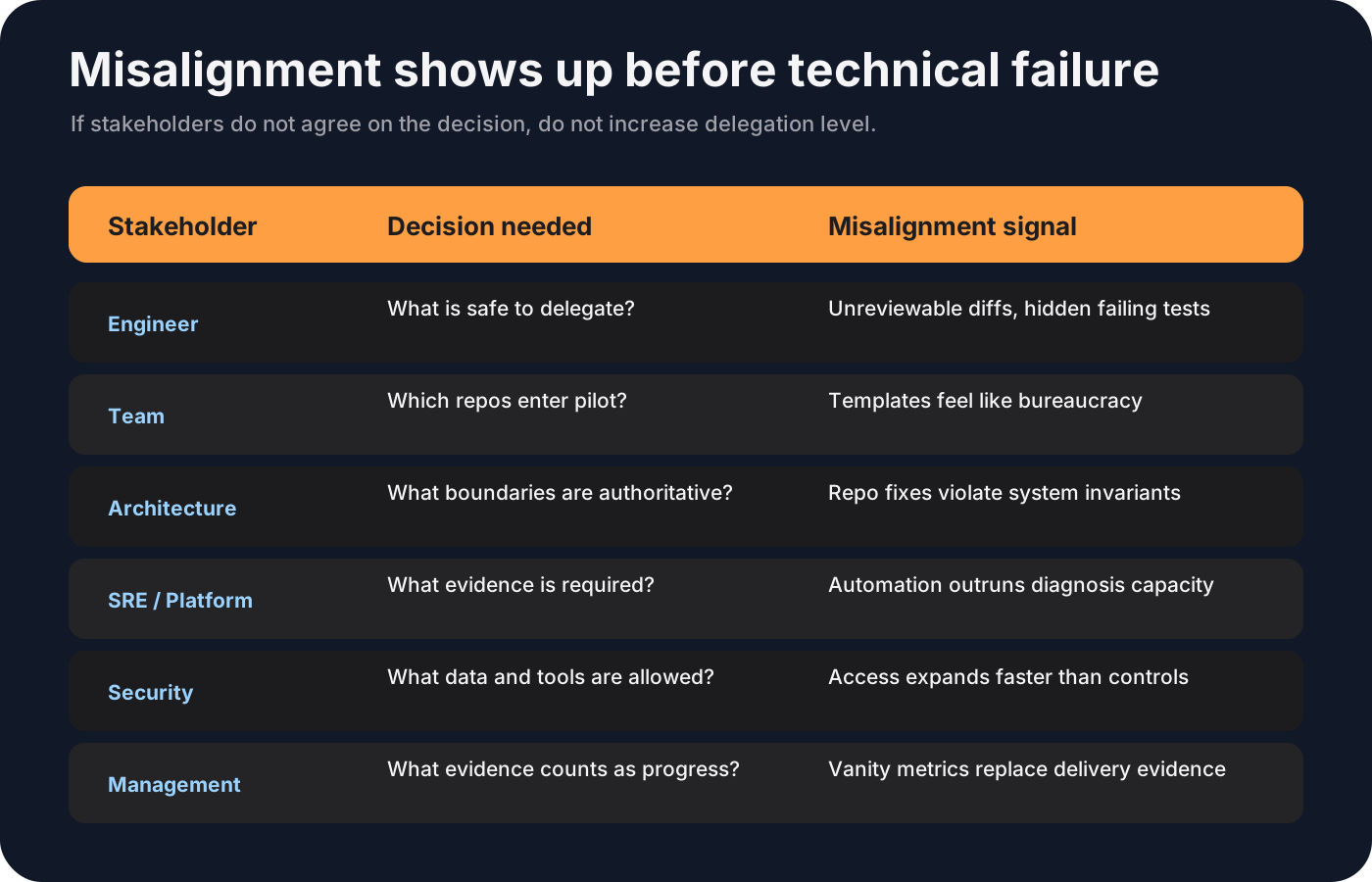
A compact matrix of the decisions and failure signals that matter during AI engineering adoption.
Slide decks
A leadership-oriented deck for explaining why AI adoption should be measured by safe delegation capacity, not model usage.
A technical deck for repository readiness, issue and PR contracts, CI guardrails, review loops, and platform governance.